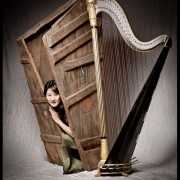
Masumi Nagasawa: Inspiring liberty in music

When Sébastien Erard (1752-1831) introduced the double-action harp in 1810, musicians were extremely enthusiastic about the new instrument and never reconsidered the qualities of the earlier single-action pedal harp. This created a lasting image of the single-action pedal harp as being “imperfect'” and devalued its musical repertoire from Classical to Romanticism. Over time the single-action harp lost its position as a favored instrument.

The aim of my research is to fill a gap in the current knowledge and understanding of repertoire and practice for the single-action pedal harp during the period 1760 to1830. The repertoire includes compositions from the period of Carl Philipp Emanuel Bach to Louis Spohr. I believe that this research will be of considerable benefit not only to players of the historical harp but also to modern musicians wishing to give performances of the repertoire from this period.

Through my research, I aim to compare modern and historical practices and determine the differences in the musical results that they produce. This will entail a critical analysis of new editions, which are regularly used in our present teaching and performing. The result of the research will be an in-depth understanding of the notation used in early sources and treatises. This, in turn, will lead us to reconsider our approach to stylistic performance. Furthermore, the results will provide direct guidance for present day musical and performance practice. The research promises to confirm the value and indispensability of scholarly research into the hidden meanings that underlie the notations and their implications for performances.

Reading from the early-music sources and reconsideration of the style of our performances should not restrict our execution of the music but inspire our imagination to make music. It also allows us to perform the compositions in a way that meets the expectations of the composers. This inspirational path seeks to accomplish a fine style, which can be achieved by conscientious listening, by cultivating a good ear and by expanding one’s flexibility in enhancing music.

My intention is therefore is to validate the contention that “historically informed performance” does not imply “restriction”, but on the contrary leads to a “liberation” of the music.

By style or delivery is signified the manner in which the singer or player performs what has been invented and written down by the composer. This, if confined to a faithful rendering of the same, as expressed by notes, signs and technical terms, is called a correct style: but if the performer, by additions of his own, be capable of intellectually animating the work, so that the hearer may be led to understand and participate in the intentions of the composer, it is termed a fine style, in which correctness, feeling and elegance, are equally united.

Louis Spohr, On delivery or style of performance from his Violin Schule (ca.1832) translated from the original by John Bishop (ca.1850).

Masumi Nagasawa; harpist and musician / researcher is currently a PhD student at Leeds University
11 dec. 2015 – Verhalend, heftig, breekbaar

Eerste concert in de vernieuwde Uilenburger Synagoge
van onze verslaggever

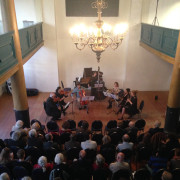
Deze geweldige musici gaven vrijdag 11 december een stemmingsvol concert. In de intieme, prachtig gerenoveerde Uilenburger Synagoge werden voor de pauze de Danses sacrée et profane van Claude Debussy en het Pianokwintet van Cesar Franck uitgevoerd, werken met een dromerig, warm en zelfs explosief karakter.

Ik kreeg het gevoel terug dat ik vroeger had , zegt een bezoekster nadat ze het octet van Schubert hoorde, het monumentale sluitstuk van de avond, ‘als mijn vader naar de oude platen van de Schubert symfonieën luisterde.’  

Schuberts opgewektheid heeft altijd een dubbele bodem. Hoe vrolijk ook, er is altijd een melancholische lading verstopt’, aldus initiatiefnemer, dirigent en violist Joan Berkhemer. Mokum Symphony streeft ernaar de emoties in de muziek te vertalen met technieken en tradities die vroeger gangbaar waren. Afgaand op de reactie van het publiek slaagt die missie, want de uitvoeringen waren bewogen, meeslepend en zelfs adembenemend.

Uit het publiek:  ‘Met Debussy werd het publiek direct ondergedompeld in de romantiek. Harpiste Doriene Marselje speelde prachtig, je stelt je geen ander instrument voor bij haar dan de harp.’ En over pianiste Patricia de la Vega, ‘Romantisch, verhalend, en van heftig naar bijna breekbaar terughoudend.’ De strijkers hadden een opvallend soepele klank en de blazers betoverden met prachtige solo’s.
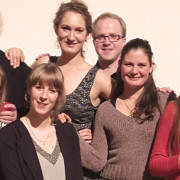
‘Dit concert was bijzonder omdat het ‘menselijk’ was, met alle avontuur van dien. De muziek sprak via de karakters, die met verschillende achtergronden en generaties een eenheid vonden in vrijheid en speelplezier.

lees meer over programma en musici

3 dec. 2015 – Berkhemer and Mann: Unparalleled in Early Beethoven Sonatas

On the 3rd of December around the corner from the aptly named Beethoven Street in Amsterdam a select audience huddled into the hall of the Brahms Street Auditorium to hear the first recital of a complete cycle of the Beethoven violin sonatas with violinist Joan Berkhemer and pianist Robert Mann. In preparation for their upcoming recording of the cycle the duo are presenting the sonatas in concert throughout the 2015/16 season. We were treated to the first three of the ten sonatas op.12 numbers 1 to 3, all written in 1798 and dedicated to Antonio Salieri who taught Beethoven vocal composition in the Italian style. The youthful vigour and humour in the outer movements is often reminicent of the young Beethoven’s other mentor Franz Joseph Haydn. The melodic invention of late Mozart is never far away in the slow middle movements of these sonatas especially in the incomparable Adagio con molto expressione of the third sonata in E-flat major. Berkhemer and Mann through three decades of partnership show great rapport in their collaborative artistry. Mann’s glowing and well balanced tone is never dominant yet his lines are always beautifully phrased and inventive. The piano is richly complimented by Berkhemer’s spontaneous, humorous and often lyrical approach on the violin. Berkhemer’s playing is of a grace and charm that reminds one of the violinists of the golden age. His tone sings with a beauty that resembles Fritz Kreisler’s yet the wit and charm of his approach to these early Beethoven Sonatas keeps them fresh and lively. The first movment of the second sonata in A major was played with a boyish lilt and dance-llike ardour full of inventive dialogue between the partners while the contrasting Andante carried the listener from the realms of Italian art-song to the introspective and philosophical meanderings of a Beethoven more akin to the composer of the late great string quartets. Among their numerous appealing qualities, the Berkhemer-Mann duo balances an insightful and philosophical approach to Beethoven with an inspired and piquant spontaneity giving us the best of both worlds in these formidable performances. I can only hope that we will hear much more of this kind of stirring music making from these musicians in the future.
Author: Emlyn Stam

21 nov. 2015 – Concert ‘Tijdloze Beethoven’

Mokum Symphony mocht in de Uilenburgersjoel na de verbouwing de herstart inluiden
met een zeer pakkend Beethoven-programma.
Na een verdiepingsslag in de tijdsgeest van de muziek door Joan Berkhemer en Emlyn Stam
speelde het strijkkwartet met een overtuigende vrijheid vol passie en emotie
het laatste kwartet en de Grosse Fuge.

Joan Berkhemer – viool | Rada Ovcharova – viool | Emlyn Stam – altviool | Willem Stam – cello

18 okt. 2015 – Masterclass spelen zonder steun

Casper Donker: ‘Vioolspelen zonder schoudersteun lijkt een grote stap.
Met deze korte introductieles laat Berkhemer je al snel ervaren waar het in de kern om gaat:
musiceren op een natuurlijke en ontspannen manier. En dat smaakt naar meer.

Anna Scott: the early-twentieth-century recordings of the Brahms circle of pianists

Anna Scott is a Canadian pianist-researcher interested in using the early-twentieth-century recordings of the Brahms circle of pianists to question the persistent gaps between the loci of performer knowledge, ethics, and act in both mainstream and historically informed approaches to Brahms’s late piano works. Far from advocating more historically accurate performances in general, Anna’s off-the-record experiments both elucidate and disturb modern constructions of Brahms’s classicist canonic identity by encouraging the emergence of the corporeal and psychological conundrums more characteristically associated with Romantic pianism.

Anna is currently pursuing a practice-based doctoral degree at the Orpheus Instituut in Ghent (docARTES) under the supervision of Daniel Leech-Wilkinson (King’s College, London), Naum Grubert (Royal Conservatoire The Hague and Conservatory of Amsterdam), and Frans de Ruiter (Leiden University, NL), and she is also a doctoral artistic researcher at the Orpheus Research Center in Music (ORCiM).


Read more: orpheus instituut

29 aug. 2015 – Huisconcert tbv presentatie Mokum Symphony (als crowdfundingsproject)

Het eerste crowdfunding huiskamerconcert op een stralende zomerse dag.
Een middag van gastvrijheid, enthousiast publiek, prachtige muziek en geweldige musici.

Beethoven Archiduke trio
Bach  ”Erbarme dich” uit de Matheus Passion
Mendelssohn Scherzo uit het pianotrio in D mineur

Helena Rasker – mezzo sopraan en pianotrio Klara Würtz – Joan Berkhemer – Nadia David

Emlyn Stam: early-20th-century recordings

The widespread availability of early-20th-century recordings has revealed to us the rich and changing performance history of the 20th century. The evidence presented to us by historical recordings conflicts with many current day narratives about our own performance practices in Western Art Music. Current performance practice is greatly influenced by the ubiquitous presence of highly-edited digital recordings and structuralist, textual approaches to music. The performances we hear on early recordings on the other hand, can often be characterized as unpredictable, live, rhetorical, and based on a moment-to-moment approach. In light of these considerations, I feel that examining and working with early recordings is of vital importance for contextualizing our current performance practices that so often go unquestioned. Our musical culture is prone to several major assumptions about our performance practices namely, that our performance practices have been passed on through tradition and retain a historical essence of truth, that our practices are fully based on historical evidence or that our practices are fully new and creative. Historical recordings tell us that none of these things tend to be true and can help us to question of the underlying tenets of our current practices. This questioning will likely lead to changes in our own attitudes to performance as well as to the musical content of those performances.

My research focuses on exploring the terrain around the following questions:

-What techniques differentiate the approach or aesthetic of early-20th -century performers from contemporary performers? 

-What differentiates the early-20th-century approach to string chamber music and viola playing from our own?

-Why are a number of stylistic traits of early-20th-century performance practice no longer used in current music-making?

-How can contemporary performing musicians integrate ‘foreign’ stylistic performing practices into their own performance practice?

I will use the analysis and study of historical viola and string quartet recordings to create experimental new performances using historical performing styles to expand the horizons of our current performing practices.  My goal is to proceed from analysis, through copying, to a greater ‘insider-understanding’ of past performance practices in order to infuse new performances with this knowledge.

Emlyn Stam; violist and musician/researcher, PhD student at the Orpheus Institute, Gent, Belgium.

www.emlynstam.com

29 mei 2015 – Feestelijk openingsconcert

Net voordat de Uilenburgersjoel de deuren sluit voor renovatie geeft Mokum Symphony
een feestelijk avond voor publiek en musici, die graag willen horen wat de visie en plannen van het project zijn,
natuurlijk worden tekst en uitleg bijgestaan door prachtige muziek, Beethoven’s septet.

Joan Berkhemer – viool, Gohar Mkhitaryan – altviool, Leonard Besseling – cello, Uxia Martinez Botana – contrabas, Heleen Oomen – klarinet, Tamara Smits – fagot, Hanna Guirten – hoorn

Uilenburgersjoel

uilenburgersjoelDe Uilenburgersjoel wordt de thuisbasis van Mokum Symphony.
Op deze unieke locatie in het Centrum van Amsterdam zullen masterclasses, lezingen en kamermuziekconcerten worden gegeven.